
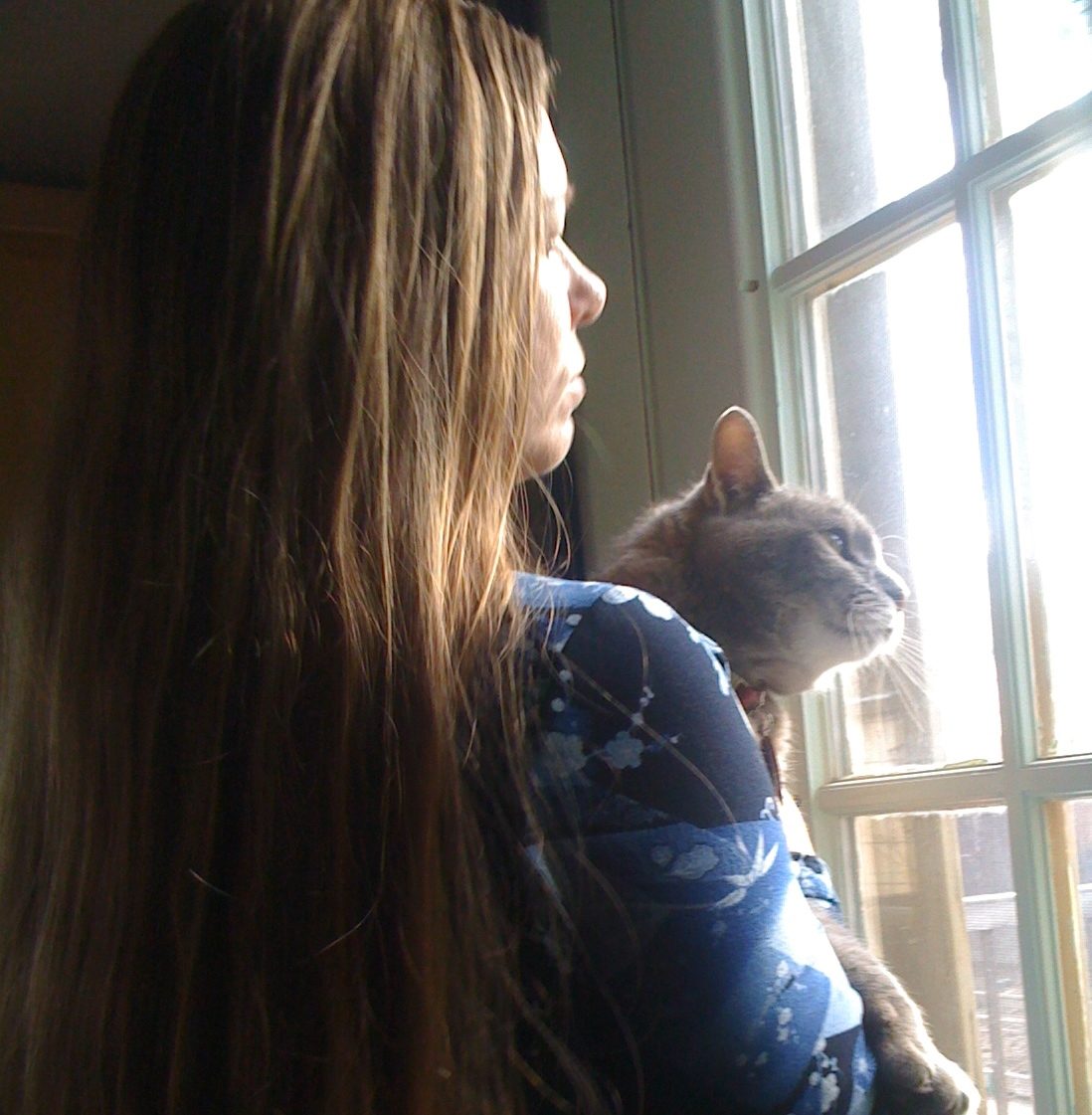


The story below tied for second place in the Pikes Peak Library District All Pikes Peak Writes 2023 fiction contest. and was published in the anthology 2023 All Pikes Peak Writes Winners. In it, a young woman travels back in time to search for her father and try to save his life. I wrote the story last summer, when my own father was on hospice care. Later, I dedicated the story to him.
MAGIC CHAI
By Brook Bhagat
for my father
The train screeched to a halt. Behind it, the vortex crackled and swirled with electric blue light, spiraling the rails still inside it for almost a minute. Then it shrank to a pinprick and disappeared. This was it.
The sleeping car was fully awake, bustling with passengers. Middle berths were unhooked from their chains and folded down. Almost everyone was on their feet, gathering their luggage and crowding the aisle. “New Delhi 1970. Departure in four hours,” yelled the conductor, weaving through the throng.
Lavender’s pulse raced. She sat in her window seat with her backpack on her lap and one hand on the iron bars, looking outside at the crowd. Her father would still be a young man with black hair. There weren’t many photographs from this far back, but Lavender knew she would recognize him. Her mother had said he was probably selling chai at the station, but the station was enormous, with thousands of people rushing about and hundreds of chai and food carts.
Just outside her window, a beggar sat stroking a small white dog with a brown spot on one eye. Lavender’s first dog, Moti, had looked just like this. She must have been about twelve years old when he was hit by an autorickshaw. She remembered holding the bleeding animal on her lap in the sitting room, sobbing. Her father gently pressed the dog’s ribs and stomach, and it cried in response.
“It’s too much, beta. I don’t think he has much time left. Maybe just be with him,” her father said.
“We have to save him, Papa! He can’t die! He can’t!”
“See his eyes. He is in so much pain, but they are full of love for you. You have loved him so well, shared so much. Breathe in the beauty, beta. Close your eyes and breathe it in to the bones.”
Lavender had gotten angry, insisted. Moti died in the taxi on the way to the animal hospital, wrapped in a towel. She slept in her parents’ bed that night, and for many nights after.
This was different, though. That dog didn’t have a chance, didn’t have even a moment left. She had four hours.
Lavender stepped onto the narrow strip of empty concrete between the train and the crowd. The heavy odors of bidi smoke and sweat were laced with the warm aromas of pav bhaji, samosas, aloo tikki and masala chai. It smelled like her father.
Lavender made her way as fast as she could to each chai-wallah, ignoring the stares and occasional comments of customers in line as she approached each cart from the side, examining the vendor. She tried to be scientific, covering the ground closest to the train first, but it was hard to see over the heads of the people in the crowd and hard to think over the cacophony of their reunions, their shopping, their joy and anger and bargaining. She kept getting lost, checking her time-period appropriate watch, finding the train again, and getting lost again.
Three and a half hours were gobbled up this way. The sun was setting, and the crowd was thinning. Lavender was covered in sweat, her legs dragging and her feet aching. She bought some chai and sat down on her backpack to drink it.
It was ordinary, just tea, milk, and sugar. She remembered her father’s recipe: strong tea leaves, cardamom, ginger, black pepper. Coriander seeds in winter. Let it boil down to half before putting in the milk and one spoon of sugar per cup. Then boil it again. After pouring, he always put extra milk and sugar, just in hers. This makes it magic chai, he’d say. This chai is not for customers, only for you. It gives you superpowers, super speed and super strength.
Lavender would run around the room. I’m so fast I can fly! Spin me to space, Papa, she would say, and he’d lift her under the arms and spin her higher and higher. You’re higher than the house! Higher than the birds! Higher than the moon!
The ordinary chai finished. Lavender crumpled the paper cup and stood up. On her way back to the train, she heard Paul McCartney singing. She turned and ran toward the sound.
Her father was not far from the train, a handsome young man with a bushy mustache and shoulder-length hair in a bright blue button-down. He was short; maybe that’s why she had missed him before. He turned down the volume on the transistor radio on his cart when he saw her. “Chai, Madam?”
Lavender was out of breath. “Yes, please.” On his left hand were the mole and crescent-shaped scars that had always looked like a face to her. They were darker than she remembered, just healed.
“It sounds good,” Lavender said, nodding at the radio and trying to sound casual. “Do you like English music?”
The man grinned and started the stove. “Only the Beatles.”
Lavender smiled. “This song is famous.”
“Yes! Number-one hit. And so beautiful: ‘Let It Be.’ Their best yet.”
He took Lavender’s money and handed her the steaming glass a moment later. She held it gingerly, blowing across the surface and inhaling the aroma. She glanced at her watch. “I need to talk to you,” she said. “It will sound strange, but please listen. I am running out of time.”
“Yes, Madam?”
“I have a message from your daughter.”
“Sorry Madam, I do not have children.”
“This message is from the future.”
The chai-wallah laughed and wiped his hands on his apron. “Message from future daughter. Are you smoking something?”
“Your hand—I know how you cut it. You were fixing your motorcycle.”
The man’s smile disappeared. He pulled a bidi from his shirt pocket and lit it. “Any neighbor could have said you that.”
“The neighbors don’t know why, though. You didn’t tell anyone. You looked up to watch someone walk by, someone in a sky blue skirt and American sneakers.”
The man’s jaw tightened. His gaze bounced around the station. Then he shrugged. “Any man would have noticed her,” he said. “She is one of a kind. My bad luck I was fixing motorcycle at the time. Any other secrets from the future?”
Lavender could tell he hardly believed this excuse himself, but before she could call his bluff, the train whistle howled from the platform. Her throat began to close. “Please believe me. Papa, it’s me. Just stop smoking. Stop smoking now and you won’t get cancer.”
He raised his eyebrows. “Okay, Madam.”
Lavender was trembling. The train whistle sounded again. She bit the inside of her cheek and looked one more time at the man, his half-apron, his necklace, a black cord with a long silver bead. His hair, soft and wavy. His eyes, that warm chestnut brown. She took one sip of the masala chai and set it back on the cart. Then she turned and ran.
The man watched her backpack disappear into the crowd. He looked at the cigarette in his hand, which had gone out, and searched for his matches.
#
The train screeched to a halt. Behind it, the vortex sizzled and swirled neon blue, twisting the rails still inside it. Then it shrank to a dot of light and disappeared.
The conductor, a fat man in a navy blue turban that matched his uniform, strode through the half-empty train. “New Delhi 1980. Departure in three hours!”
Lavender wasn’t surprised that the first visit hadn’t worked. That was fine; he’d be in his early thirties now, like her. He was 58 when he died. There was still plenty of time for him to quit. All the charcoal phlegm memories that paralyzed her brain and made her chest ache would be erased, wiped clean with a new future for him and a new past for her. A new present for her, with him in it. This was it.
Lavender slung her backpack over one shoulder, made her way to the door, and stepped onto the narrow strip of empty concrete between the train and the crowd.
His cart was further from the platform than it had been before, and it took her almost two hours to find it. The smell of summer in New Delhi, the bidis and sweat and spices, was exactly the same. Her father was also the same, except he had cut his hair and his mustache was a bit smaller, neater. He wore a white shirt now. The same necklace, or a new one in the same style. This is a village thing, he had told her once. It keeps you safe from the evil eye.
Lavender waited in line, then approached slowly. “One please.”
“You!” Lavender’s father dropped a huge empty pot, cursed, and picked it up. “Why are you here again?”
“I have to save you. You’re going to get lung cancer, Papa, before you are even 60 years old. The bidis are going to kill you.”
His hands were shaking. “What are you? Angel or demon? How are you same, same hair, same white T-shirt, same purple jeans?”
“Not purple. Lavender,” she said. She paused, knitted her brow, and then shook her head. “I don’t have time,” she said. “Listen. There is a special train that let me come to you here, in the past. I really am your daughter. But I can only visit for a short time, and I can’t come back to this moment again.”
The man’s face softened. “I want to believe you,” he said. “But my wife…” he lowered his voice. “We can’t have children.”
Lavender smiled. “You will,” she said. “Goa will be lucky for you.”
“We are planning a trip to Goa!”
A man’s voice rang out from the back of the line. “Hey chai-wallah! Less talk and more chai. I have a train to catch!”
“Make your own bloody chai,” said Lavender’s father. “I am talking to my daughter!”
The customers looked from him to Lavender, exchanging glances as they walked away.
The chai-wallah didn’t care. He stepped out from behind the cart, the light of his eyes no longer hidden, no longer guarded. He studied her, her eyes, her cheekbones, her nose. Her chin, dimpled, like his own. “You are my future daughter. I feel it now—and I see my Rachael in you. I don’t know how you are here, but I believe you.” He pressed his palms together and took a step towards her. “Thank you for bringing me hope.”
As she crouched to touch his feet, Lavender’s tear dripped on the toe of his camel leather shoe. She stood up slowly, and he touched her bowed head lightly in blessing.
“Papa, I have missed you so—” The train whistle cut her off just as her father took her hands.
“What can I do for you, beta? Anything.”
“Quit smoking,” she said, squeezing his hands. “Please. We watched the cancer eat you alive. There wasn’t anything I could do about it then, but now there is. It doesn’t have to happen. Promise.”
“Yes, daughter,” he said. “I will stop. I promise.”
The train whistled again. Lavender let go and ran.
#
The train screeched to a halt. Behind it, the vortex continued to whirl and spin for almost a minute, twirling the rails still inside. Then it condensed to a tiny spot of blue fire and was gone.
The booming voice of the conductor jolted Lavender awake. “New Delhi 1990. Departure in two hours!”
This wasn’t right. Everything was supposed to be fixed, everything was supposed to be okay now. She should be on her way home. She should be on her way back to the bungalow in Goa, where her father would be healthy, sitting in his T-shirt and green plaid lungi, waiting to play chess with her in the courtyard. She would win and then she would scold him for going easy on her even though she was grown up now. She should be done with this train forever.
But she wasn’t. It was moving by the time she got her sneakers on and got to the open doorway, and she had to jump. She landed hard on one knee, tearing her jeans and skin. She dropped her backpack, and its contents spilled onto the narrow strip of empty concrete between the train and the crowd.
A young couple immediately knelt to help her. “Oh my goodness! This looks serious.” The man pulled a handkerchief from his pocket and began touching the wound lightly, soaking up the blood. The woman gathered Lavender’s notebook, water bottle, and battered bag of chips and put them back in her backpack.
“Isko doctor ko dekhana chahiyae,” the woman said.
“Yes, you should go to the doctor,” said the man.
“I don’t have time,” Lavender said, taking her own handkerchief from her pocket. She tied it around her knee, and the woman helped her stand up. “Thank you so much. I’ll be fine.”
Lavender could walk, but barely. It took her almost an hour to limp to her father’s last spot, and he wasn’t there. Then, intertwined with the din of the station, she heard Paul McCartney again. This time it was “Yesterday.”
Lavender followed the sound to its source, a tape player on the back shelf of a proper tea stall, much larger than the cart. It was painted in cheerful pinks, yellows, and blues, with strings of chips and cookies hanging from the top corners. He had three stools, two in front for customers and one in back, where he sat. He was singing along, looking far away. There was no line. When he saw Lavender, he jumped over the counter and ran to her. He took her arm on his shoulder and helped her to a stool.
“Lavender! Oh God, beta, what happened to you?”
She touched his gray-stubbled cheek. “I fell getting off the train. But Papa, why are you here?”
“This is mine, brand new. So much better than the cart. How do you like it? We opened this stall just a month ago.” He stood and gestured to the marigold garlands that still hung in half-circles from the ceiling, now dried.
“No, I mean, you quit smoking, so—”
“Yes, I mean, I tried, beta. I did quit, actually, three times. When my tooth was pulled, I quit for almost a month.”
“It’s not a joke, Papa! I am not just a warning on a cigarette packet. I have seen it, suffered it. You’ll leave us behind, leave us all alone. You don’t know what it’s going to do to Mom. What it’s going to do to me—I can’t play chess. Even after all this time, just looking at a chessboard feels like needles.” She broke down, covering her face. The tears mixed with the dried blood on her hands.
“No, no. Ro mut, beta.” Lavender’s father dipped a white cloth in a bucket of water and began cleaning her face and hands. “I will try again, I promise. I will quit. For you.”
#
The train screeched to a halt. Behind it, the vortex crackled luminescent blue, twisting the rails still inside into a corkscrew. Then it hissed down to a pinprick and vanished.
“New Delhi 2000. Departure in one hour!”
Lavender always slept good on the train, rocked to sleep with the motion and hypnotic sound of the wheels on the tracks. She loved street food and station food, journeys and adventures, but now she would have rather been anywhere other than this godforsaken train.
She gritted her teeth, grabbed her backpack, and stood up from the tiny table bolted to the wall under the window. This was it. She limped off onto the narrow strip of empty concrete between the train and the crowd.
Her father was in the same place he had been the last time. His hair was shoulder-length again, streaked with gray. His salt-and-pepper mustache was bushy again. He was wearing a pale yellow button-down, sliding two glasses across the counter to a woman in a floral sari and a teenage boy in a baseball cap.
“Old Lavender!” he yelled and waved when he saw her, then turned around quickly and rubbed his foot on the ground.
His smile disappeared when he saw her limp. Again he ran to her and put his arm around her, almost carrying her to the stool and sitting down beside her. “How is this leg not healed?”
“It is ten years for you,” she said. “Only ten hours for me.”
He nodded. “I don’t know how your special train works, but I think I am the luckiest man in the world—what father gets to meet his future daughter, all grown up?” His eyes crinkled. “It makes sense, though—you do smell like you’ve been on the train for a couple days.” His tone was playful, but Lavender’s face was serious.
“Did you stop smoking bidis?”
He paused. “I tried, I really did. I tried a thousand times. It’s too late for me, beta. My body is too used to it. I can’t quit now. You don’t know what it’s like—if I don’t smoke after food I feel crazy.”
“Not everyone knows it’s going to kill them, Papa. Maybe they have an excuse. But you know. It’s a goddamn fact. But you don’t care, eh? You don’t care about anyone but yourself.”
He took her hand. “I am not strong enough. I have failed you and I am so sorry. Please forgive me, beta. Please.” He lifted her hand to his forehead and looked down.
Lavender yanked her hand back. “No I do not forgive you!” She got up from the stool. “How can you just give up? You wanted a daughter so much, but now you’re abandoning me. You are choosing to abandon me.” It had been eight years, but it hurt like it had just happened, her mother screaming at the nurse with the defibrillator to do it again, do it again. The pale, bald skeleton in the bed bouncing up like a marionette each time.
Lavender’s father stood up and took her in his arms. He held her as she shook. “I am weak, beta.” He smoothed her hair. “I love you more than anything. You are the diamond of my life. I have not accomplished anything, just boiling tea for thirty years, but I have no regrets because I have you. You are my gift to this world—so smart, so courageous, so loving. I would never hurt you if I could stop it. I am just weak.”
Lavender sniffed and wiped her nose on her hand. “You don’t understand. I can’t make this journey again. This is my last chance to save you. You have to listen to me. You have to quit!”
“Forgive me, beta.” His eyes were full. “I just can’t do it.”
“Then it is all for nothing,” she said. “I failed. I was so stupid, thinking I could give you back your life.”
“Not all for nothing, not if we can stop crying.” He chuckled and wiped his nose on his handkerchief. “How much time do you have?”
Lavender looked at her watch. “Twenty minutes.”
“Take a deep breath. Close your eyes and pull in all the beauty, like I taught you. To the bones.”
Lavender closed her eyes and let the aroma enter her deeply—aloo tikki, pav bhaji, samosas. His bidi smoke and masala chai. The sobbing slowed. The sadness lifted.
“What now, Papa?”
“First, music.” He grinned. “What should it be? I bet you like Madonna now.”
Lavender laughed. “No way. I mean, yes, but not now, not for this. It has to be the Beatles.”
“Got it!” He dashed behind the stall and began rifling through a stack of CDs. He took one out and put it in the player.
Lavender knew it from the first chord. “‘Imagine,’” she said. “My favorite.”
“Mine too,” he said, turning it up. “And that’s not all.”
“Really! What could be better than this?”
“One more masala chai,” he said, putting a pot on the stove. “One more magic chai for my Lavender.”
She grinned. He started the stove. First he put water, then strong tea, cardamom, ginger, and black pepper. Then he boiled it down to half. Lavender took in the delicious sight of him, the crow’s feet around his eyes, the way the sunlight hit his collarbone. “What next?” he said.
Lavender laughed. “Milk and sugar.”
The liquid became light and then darkened again as he let it boil. He poured the chai and added extra milk and sugar to both glasses. “Superpowers for both of us this time.”
He took off his apron and came around to her side. He sat next to her, and they raised their glasses, smelling the chai, blowing on it, watching the skin form on the surface. “Cheers,” he said. They clinked glasses.
“To magic chai,” Lavender said.
And it was.
#
 Brook Bhagat